
Trilobites
Tourmaline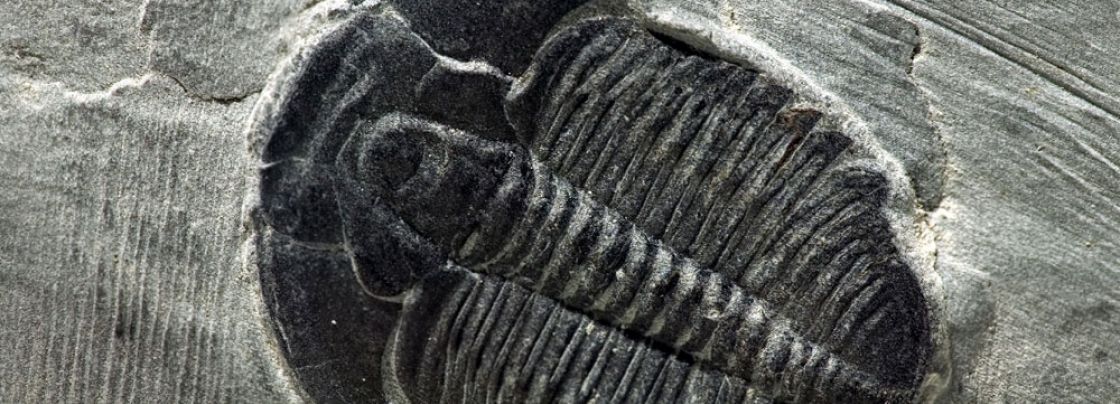
What are trilobites?
Trilobites were hard shelled, many legged creatures, many of which roamed the sea floor for nearly 300 million years, becoming finally extinct about 250 million years ago. Dinosaurs had yet to appear when the last trilobites died. Trilobites show a HUGE diversification of type - already 15,000 different species have been identified and new species are STILL being unearthed every year. They ranged in size from 1mm to 700mm (well over 2 feet in length). Visit the Manitoba Museum in Winnipeg, Canada to see one 720mm long by 400mm wide! Most types probably existed as predator and scavengers on organic debris, although some were particle feeders. They occupied marine habitats as diverse as tropical reefs to deep polar oceans.
The name trilobite refers not to the 3 main segments of the body but instead to 3 lobes running the length of the animal. The central axial lobe contained all of the major organs. The numerous fine, jointed legs and antennae are only very rarely preserved in fossils. Trilobite fossils have been found on all continents - in areas where seas once existed OR where sea floor rocks have been raised in continental plate movements (e.g. Morocco's Atlas Mountains). No fresh water forms have ever been found - trilobites were purely sea creatures. Some sea bed rocks show neat tracks left by crawling trilobites.
When fearful of attack, trilobites used their hard exoskeleton and their ability to 'enroll' to protect themselves from predators. Rolling up into a ball shielded the delicate antennae, legs and soft under surface.
Trilobite eyes
Many people are, rightly, intrigued by the eyes visible on trilobite fossils. Predator species clearly had a need for eyes sensitive to motion and trilobites developed one of the earliest sophisticated visual systems in the animal kingdom. Trilobites showed huge variation in eye design - from large, highly complex compound eyes with up to 15,000 separate lenses per eye and 360 degree visual field to species with eyes raised up on stalks in species that lived amongst organic debris. However, some species, living in deep, dark ocean conditions had no eyes, whilst the fossil record shows that other species appear to have gradually lost theirs (secondary eyeless species).
Our View
Trilobites have been a part of the Crystals collection since the company first stared. We aim to keep several species permanently in stock, adding special smaller collections of rarer types from time to time. Our buyers are particularly fond of trilobites, finding them intriguing, amusing and intellectually challenging (to identify!).
Buying in Morocco (where a majority of our trilobites come from) presents challenges and rewards that are unique to North Africa. Finding exactly what we want as the temperature relentlessly rises ever higher and the sand starts to swirl through the air...The rewards though are worth it with customers of all ages revelling in the chance to hold such an important and intricate complete fossil in the palm of their hand.
- Month stones
- January - Garnet also Ruby
- February - Amethyst also Bloodstone
- March - Aquamarine also Jade
- April - Quartz also Opal
- May - Rose Quartz also Agate
- June - Pearl also Moonstone
- July - Ruby also Carnelian
- August - Peridot also Sardonyx
- September - Iolite also Lapis Lazuli
- October - Opal also Pink Tourmaline
- November - Topaz also Citrine
- December - Turquoise also Tanzanite
- Zodiac Stones
- Capricorn (Dec 22-Jan 19) Amber, Carnelian, Garnet, Onyx, Smoky Quartz, Turquoise
- Aquarius (Jan 20-Feb 18) Aquamarine, Amethyst, Amber, Celestite, Fluorite, Labradorite
- Pisces (Feb 19-Mar 20) Moonstone, Amethyst, Aquamarine, Blue Lace Agate, Fluorite, Turquoise
- Aries (Mar 21-Apr 19) Ruby, Aventurine, Bloodstone, Carnelian, Garnet, Kunzite
- Taurus (Apr 20-May 20) Azurite, Kyanite, Lapis Lazuli, Malachite, Rhodonite, Tigers Eye
- Gemini (May 21-Jun 20) Chrysocolla, Citrine, Serpentine, Tourmalinated and Rutilated Quartz, Tiger's Eye
- Cancer (Jun 21-Jul 22) Moonstone, Pearl, Opal, Ruby, Moss Agate, Amber
- Leo (Jul 23-Aug 22) Tiger's Eye, Ruby, Carnelian, Kunzite, Larimar, Rhodocrosite.
- Virgo (Aug 23-Sep 22) Peridot, Amazonite, Citrine, Garnet, Moonstone, Opal
- Libra (Sep 23-Oct 22) Iolite, Opal, Kunzite, Lapis Lazuli, Moonstone, Peridot
- Scorpio (Oct 23-Nov 21) Topaz, Malachite, Charoite, Garnet, Obsidian
- Sagittarius (Nov 22-Dec 21) Turquoise, Amethyst, Labradorite, Sugilite, Topaz, Garnet
- There are a few stones that are suitable for every Zodiac sign: Moldavite, Tourmaline, Clear Quartz and Herkimer Diamond.