
Quartz also known as Rock Crystal
Peridot Rose Quartz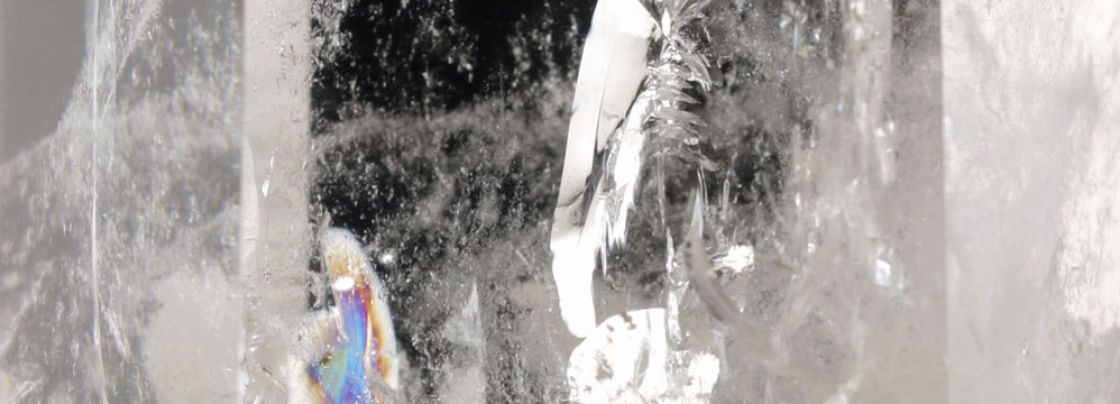
Sources
Crystals imports quartz from every corner the world, from the peaks of the Himalayas to the deserts of Arizona!
Origin
Quartz crystals form when molten rock rich in silica cools down. It is found worldwide and makes up over one tenth of the Earth’s crust.
Composition
Silicon dioxide - SiO2
Structure
Trigonal, Mohs scale of hardness 7.
Quartz can be naturally double terminated, form clusters, beds or single massive crystals. Crystals can show ghostly’ internal veils formed during interrupted growth patterns.
Colour
Clear quartz/rock crystal is colourless and transparent, often with beautiful fleeting rainbows. ‘Herkimer diamonds’ are exceptionally clear, completely terminated crystals that were formed in liquid suspension and originally discovered in Herkimer County, New York State.
Also:
Citrine – yellow (rare in its natural state but more commonly heat-treated amethyst)
Amethyst – purple due to iron
Smoky – light to dark brown, either natural or treated quartz, sometimes known as smoky topaz or Cairngorm
Milky (Gyrosol) – milky white/cream due to gas and liquid bubble inclusions.
Rose - Pale pink and transluscent due to manganese. Rarely found as points.
Inclusions
Rutilated quartz contains needle-like rutile crystals of golden, orange or red colour, explaining the popular name of Venus Hair Stone.
Tourmalinated quartz contains fine or thicker needle-like black tourmaline crystals, usually black, and on rare occasions green or pink.
History and Mythology
Imagine ice that had been frozen so hard into crystals by the gods that it would never melt – for centuries this was the ‘explanation’ for quartz! The Greek word kyros (meaning icy cold) is the origin of our word crystal.
Our View
Where do we start? The company’s connection with quartz and amethyst have been central to our development. During the last 20 years we have bought from all of the listed sources. Recently we have been buying from the USA and Brazil. In Minas Gerais there are significant quartz deposits including many special formations, such as smoky elestial, natural citrine cathedrals and tourmalinated quartz.
One of my most inspiring tasks has been to watch the cutting of boulder quartz into spheres, obelisks, wands and pyramids – the immense skill shown by multi-generational families leaves one breathless. A modest house, a coffee in the kitchen and a walk into the rear yard, then suddenly the magnificent collection of, say, lazer crystals.
At other times, huge slabs of boulder quartz can be seen tranported around in the backs of lorries. One visit saw the biggest quartz sphere ever: it needed a crane to lft it and was heading for Tuscon... This was not purchased by us; no-one was strong enough!
However, these days striking a deal can be problematic. At present Japanese buyers are prepared to buy wholesale consignments of AA Grade rutile quartz in Brazil for more than we would be able to charge in our shops in the UK! When crystal healing is ‘fashionable’ prices can rise sharply, but a downturn sees craftsmen moving and leaving quartz cutting. Inconsistent demand is thereby the cause of variable quality and pricing. For example, pyramid cutting is not presently in fashion.
Crystals (UK) spends far more energy on buying quartz than sales justify as we believe quartz is a central part of our narrative. Many of our best pieces now grace colleagues’ rooms, healing centres and stately houses.
We are currently still able to sell special value quartz but it is unlikely that these prices will continue to be possible as the Brazilian exchange rates now mean that new quartz is likely to be more expensive.
'Radio active' (not!)
In 1880, the French Nobel physicist Pierre Curie (husband of Marie) discovered that quartz is piezo-electric – that is, it will produce an electric charge on its surface when put under pressure from different directions.
During the Second World War, quartz was heavily used in radio transmissions – it was this demand that led to the development of synthetic quartz (not popular with Crystals' staff!).
- Month stones
- January - Garnet also Ruby
- February - Amethyst also Bloodstone
- March - Aquamarine also Jade
- April - Quartz also Opal
- May - Rose Quartz also Agate
- June - Pearl also Moonstone
- July - Ruby also Carnelian
- August - Peridot also Sardonyx
- September - Iolite also Lapis Lazuli
- October - Opal also Pink Tourmaline
- November - Topaz also Citrine
- December - Turquoise also Tanzanite
- Zodiac Stones
- Capricorn (Dec 22-Jan 19) Amber, Carnelian, Garnet, Onyx, Smoky Quartz, Turquoise
- Aquarius (Jan 20-Feb 18) Aquamarine, Amethyst, Amber, Celestite, Fluorite, Labradorite
- Pisces (Feb 19-Mar 20) Moonstone, Amethyst, Aquamarine, Blue Lace Agate, Fluorite, Turquoise
- Aries (Mar 21-Apr 19) Ruby, Aventurine, Bloodstone, Carnelian, Garnet, Kunzite
- Taurus (Apr 20-May 20) Azurite, Kyanite, Lapis Lazuli, Malachite, Rhodonite, Tigers Eye
- Gemini (May 21-Jun 20) Chrysocolla, Citrine, Serpentine, Tourmalinated and Rutilated Quartz, Tiger's Eye
- Cancer (Jun 21-Jul 22) Moonstone, Pearl, Opal, Ruby, Moss Agate, Amber
- Leo (Jul 23-Aug 22) Tiger's Eye, Ruby, Carnelian, Kunzite, Larimar, Rhodocrosite.
- Virgo (Aug 23-Sep 22) Peridot, Amazonite, Citrine, Garnet, Moonstone, Opal
- Libra (Sep 23-Oct 22) Iolite, Opal, Kunzite, Lapis Lazuli, Moonstone, Peridot
- Scorpio (Oct 23-Nov 21) Topaz, Malachite, Charoite, Garnet, Obsidian
- Sagittarius (Nov 22-Dec 21) Turquoise, Amethyst, Labradorite, Sugilite, Topaz, Garnet
- There are a few stones that are suitable for every Zodiac sign: Moldavite, Tourmaline, Clear Quartz and Herkimer Diamond.