
Opal
Obsidian Orthoceras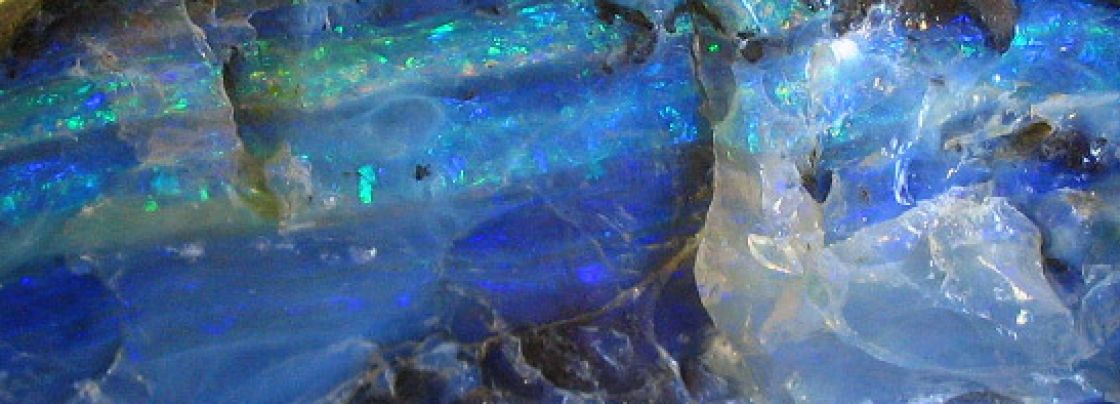
Sources
Crystals buys its range of opals from the extremely hot, dry centre of Australia where the opal miners not only extract opal underground, their houses are also underground!
Origin
Opals form very slowly in sedimentary rocks (e.g. sandstone) where water is present.
Composition
Hydrated silica: SiO2·n(H2O)
Structure
No crystal structure, instead a regular arrangement of miniscule silica spheres which diffract, or scatter, light. Variations in sphere size determine the range of colours seen.
Colours
More precious opals all show some internal ‘colour play’ or ‘flashes’. Blue/green opals are very popular but those containing reds, oranges or violets usually demand a premium. ‘Fire opals’ refer to red/orange clear opals (NOT from the internal flashes mentioned above).
Caring for your opal
The particular characteristics of opals mean that certain rules must be followed to keep the stones in good condition:
Avoid scratching the relatively soft surface.
Avoid very high temperatures (e.g. very hot water) or extreme low humidity (e.g., bank vaults!).
Clean, if necessary, with mild detergent and a damp cloth or soft toothbrush.
If storing for long periods, pop in cotton wool in a sealed plastic bag with a few drops of water.
History and Mythology
Pliny, in Roman times, described opal as having ‘the fire of the ruby, the brilliant purple of the amethyst, and the sea-green of the emerald, all shining together in incredible union’.
The Arabs believed opals fell from heaven in flashes of lightning, gaining their fiery flashes as they fell.
Opals can be somewhat controversial – even unlucky? This idea has come about from people not knowing how to look after opal stones (see below). We find opals are beautiful, inspirational and suited to everyone! Obviously their properties may result in careless owners suffering damage – a natural consequence of their own behaviour NOT opals being unlucky. It is also said that the opal cutters were always the poorest of the stone cutters as opals are easy to damage during cutting (so the cutters’ profits would be lost).
- Month stones
- January - Garnet also Ruby
- February - Amethyst also Bloodstone
- March - Aquamarine also Jade
- April - Quartz also Opal
- May - Rose Quartz also Agate
- June - Pearl also Moonstone
- July - Ruby also Carnelian
- August - Peridot also Sardonyx
- September - Iolite also Lapis Lazuli
- October - Opal also Pink Tourmaline
- November - Topaz also Citrine
- December - Turquoise also Tanzanite
- Zodiac Stones
- Capricorn (Dec 22-Jan 19) Amber, Carnelian, Garnet, Onyx, Smoky Quartz, Turquoise
- Aquarius (Jan 20-Feb 18) Aquamarine, Amethyst, Amber, Celestite, Fluorite, Labradorite
- Pisces (Feb 19-Mar 20) Moonstone, Amethyst, Aquamarine, Blue Lace Agate, Fluorite, Turquoise
- Aries (Mar 21-Apr 19) Ruby, Aventurine, Bloodstone, Carnelian, Garnet, Kunzite
- Taurus (Apr 20-May 20) Azurite, Kyanite, Lapis Lazuli, Malachite, Rhodonite, Tigers Eye
- Gemini (May 21-Jun 20) Chrysocolla, Citrine, Serpentine, Tourmalinated and Rutilated Quartz, Tiger's Eye
- Cancer (Jun 21-Jul 22) Moonstone, Pearl, Opal, Ruby, Moss Agate, Amber
- Leo (Jul 23-Aug 22) Tiger's Eye, Ruby, Carnelian, Kunzite, Larimar, Rhodocrosite.
- Virgo (Aug 23-Sep 22) Peridot, Amazonite, Citrine, Garnet, Moonstone, Opal
- Libra (Sep 23-Oct 22) Iolite, Opal, Kunzite, Lapis Lazuli, Moonstone, Peridot
- Scorpio (Oct 23-Nov 21) Topaz, Malachite, Charoite, Garnet, Obsidian
- Sagittarius (Nov 22-Dec 21) Turquoise, Amethyst, Labradorite, Sugilite, Topaz, Garnet
- There are a few stones that are suitable for every Zodiac sign: Moldavite, Tourmaline, Clear Quartz and Herkimer Diamond.