
Fluorite (Pronounced: 'floor–ite')
Charoite Fossil Wood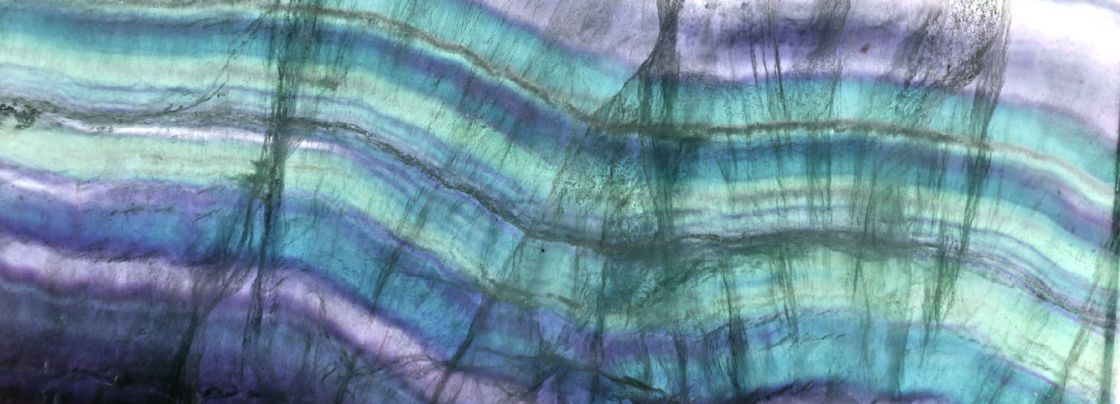
Sources
Our fluorite mainly comes from Xinjiang (pronounced: 'Zin-shan') in north-west China, with a few specimens coming from other locations, e.g., Mexico and Teesdale.
Origin
A mineral often found in veins near hot springs. Ancient Egyptians carved statues from fluorite. Carving has also reached exceptional standards in China for over 300 years.
Composition
Calcium fluoride - CaF2
Structure
Cubic (Mohs scale 4).
Colour
Green, purple, blue and yellow.
* Blue John
'Blue John' is the name given to fluorite from Derbyshire, England, and is thought to be an adaptationof the French, bleu jaune or "blue yellow".
This brown hued variety of the stone was extremely popular in Victorian times, however, evidence shows that it was mined as far back as the Roman occupation.
Veins of 'Blue John' are becoming rare to find, however, the Derbyshire show caves still make a worthwhile visit.
Our View
The Chinese carvers love working with multi-coloured Chinese fluorite. However, they suffer huge breakages during carving, explaining the higher prices for bigger, more finely carved pieces.
Our company policy has been to actively promote fluorite. When we first opened it was largely ignored, with high street jewellers rude or ignorant about it – some even mistaking it for amethyst.
We have encouraged silversmiths in Poland and India to work with this stone with some (but not complete) success. It was interesting to watch Indian producers market it once they had got used to its different characteristics.
Crystals (UK) was an early pioneer in promoting a ‘popular market’ and we are very proud of this. The interplay of light in the extraordinary crystal structure and colour variation gives fluorite a feel no other stone enjoys.
- Month stones
- January - Garnet also Ruby
- February - Amethyst also Bloodstone
- March - Aquamarine also Jade
- April - Quartz also Opal
- May - Rose Quartz also Agate
- June - Pearl also Moonstone
- July - Ruby also Carnelian
- August - Peridot also Sardonyx
- September - Iolite also Lapis Lazuli
- October - Opal also Pink Tourmaline
- November - Topaz also Citrine
- December - Turquoise also Tanzanite
- Zodiac Stones
- Capricorn (Dec 22-Jan 19) Amber, Carnelian, Garnet, Onyx, Smoky Quartz, Turquoise
- Aquarius (Jan 20-Feb 18) Aquamarine, Amethyst, Amber, Celestite, Fluorite, Labradorite
- Pisces (Feb 19-Mar 20) Moonstone, Amethyst, Aquamarine, Blue Lace Agate, Fluorite, Turquoise
- Aries (Mar 21-Apr 19) Ruby, Aventurine, Bloodstone, Carnelian, Garnet, Kunzite
- Taurus (Apr 20-May 20) Azurite, Kyanite, Lapis Lazuli, Malachite, Rhodonite, Tigers Eye
- Gemini (May 21-Jun 20) Chrysocolla, Citrine, Serpentine, Tourmalinated and Rutilated Quartz, Tiger's Eye
- Cancer (Jun 21-Jul 22) Moonstone, Pearl, Opal, Ruby, Moss Agate, Amber
- Leo (Jul 23-Aug 22) Tiger's Eye, Ruby, Carnelian, Kunzite, Larimar, Rhodocrosite.
- Virgo (Aug 23-Sep 22) Peridot, Amazonite, Citrine, Garnet, Moonstone, Opal
- Libra (Sep 23-Oct 22) Iolite, Opal, Kunzite, Lapis Lazuli, Moonstone, Peridot
- Scorpio (Oct 23-Nov 21) Topaz, Malachite, Charoite, Garnet, Obsidian
- Sagittarius (Nov 22-Dec 21) Turquoise, Amethyst, Labradorite, Sugilite, Topaz, Garnet
- There are a few stones that are suitable for every Zodiac sign: Moldavite, Tourmaline, Clear Quartz and Herkimer Diamond.