
Amber Succinte - Baltic Amber
Amethyst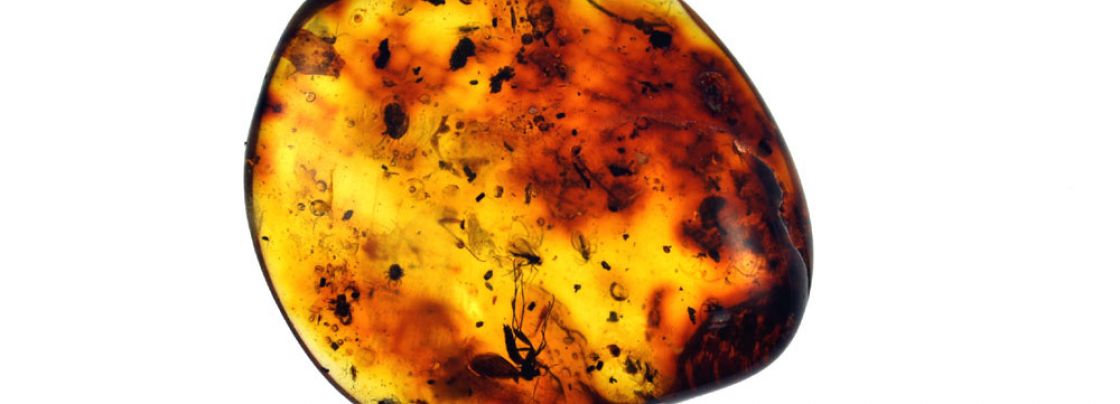
Sources
90% of our amber is from Kaliningrad (Russia) with the rest coming from Lithuania, Latvia and Poland. Amber is also found in the Dominican Republic, the United Kingdom, Switzerland and Lebanon, to name but a few.
Origin
Sub-tropical forests existing 30–50 million years ago in the Baltic region contained various tree species (especially pines) that produced a sticky resin from their bark. This gradually dripped down the trunk, collecting in small ‘pools’ on the forest floor. Air bubbles were often trapped, as were numerous other items (see Inclusions section).
The resin slowly dried and solidified to form a fossilised resin after covering and compaction by forest sediments. Rivers were responsible for moving some amber to the coast, from where it was distributed by sea, even reaching the beaches in eastern England. Some amber deposits lie in sediments extending out under the Baltic Sea. Pieces can become dislodged in storms and float away.
Composition
Organic – carbon, hydrogen, oxygen. Close to C10H16O with hydrogen sulphide.
Structure
Amorphous (no distinct crystal structure). Amber is a naturally soft material (Mohs scale 2).
Colour
Many shades of yellow/brown. It can be transparent, translucent or opaque. ‘Cognac’ refers to the rich orange red, ‘Golden’ to golden yellow, ‘Buttermilk’ or ‘Candy’ to opaque cream amber and ‘Green’ to a specially prepared form. Raw amber pieces often have a reddish brown colour due to surface oxidation in the air.
Inclusions
Amber inclusions have provided scientists with superbly preserved evidence of forest plants and animals living millions of years ago (many of which are now extinct) which became ‘trapped’ in sticky resin.
Specimens have been found with perfectly preserved:
• insects such as flies, ants, spiders, bees (sometimes with full pollen sacks), mayflies, mosquitoes, moths, grasshoppers etc.
• small animals such as frogs, lizards, bird feathers, snakeskin or footprint impressions
• mosses, mushrooms and algae
• pieces from higher plants such as leaves, twigs, flowers, buds, bark, cones and pollen.
Fake inclusions from Russia are commonplace (scorpions are a favourite!). Air bubbles are a common inclusion and during amber preparation may form the ‘sun bursts/sun spangles’ which look like circular shiny fish scales. Exceptional pieces may contain a water droplet trapped in an air pocket – this would be REALLY old water!!
Our View
Crystals (UK) has invested an enormous amount of energy in amber and we are very much part of the amber trade in Gdansk, well known by the leading producers of amber. Sourcing amber is a fraught undertaking for our manufacturers. Environmental restrictions by local authorities in Gdansk mean that huge deposits are largely left untouched. This has resulted in the majority of amber coming from Russia.
Sadly, the frontier town mentality and criminal elements make it nearly impossible to buy from Russian silver manufacturers. Much ‘cheap’ street/market amber jewellery comes from these sources. Crystals believes that the 92.5% marking cannot be trusted – with the real silver content being 80% or so.
Russian amber is also exported ‘raw’ to Poland where it is cut, cleaned and prepared for jewellery manufacture. Unfortunately, criminal elements have dominated this export trade and recently a ‘clean up’ by the local government has taken place. Crystals (UK) welcomes the attempts to remove criminal elements from the amber trade. An unwelcome consequence has been increased prices and reduced availability, especially of larger pieces. The main mine has suffered from heavy flooding and, more significantly, has lacked appropriate investment. It is difficult to assess the long term reliability of amber supplies and we may experience large price increases (similar to oil and gas recently). However, Gdansk is sitting on vast reserves of amber which could be exploited – resulting in a price crash. Crystals does not believe this to be imminent!
- Month stones
- January - Garnet also Ruby
- February - Amethyst also Bloodstone
- March - Aquamarine also Jade
- April - Quartz also Opal
- May - Rose Quartz also Agate
- June - Pearl also Moonstone
- July - Ruby also Carnelian
- August - Peridot also Sardonyx
- September - Iolite also Lapis Lazuli
- October - Opal also Pink Tourmaline
- November - Topaz also Citrine
- December - Turquoise also Tanzanite
- Zodiac Stones
- Capricorn (Dec 22-Jan 19) Amber, Carnelian, Garnet, Onyx, Smoky Quartz, Turquoise
- Aquarius (Jan 20-Feb 18) Aquamarine, Amethyst, Amber, Celestite, Fluorite, Labradorite
- Pisces (Feb 19-Mar 20) Moonstone, Amethyst, Aquamarine, Blue Lace Agate, Fluorite, Turquoise
- Aries (Mar 21-Apr 19) Ruby, Aventurine, Bloodstone, Carnelian, Garnet, Kunzite
- Taurus (Apr 20-May 20) Azurite, Kyanite, Lapis Lazuli, Malachite, Rhodonite, Tigers Eye
- Gemini (May 21-Jun 20) Chrysocolla, Citrine, Serpentine, Tourmalinated and Rutilated Quartz, Tiger's Eye
- Cancer (Jun 21-Jul 22) Moonstone, Pearl, Opal, Ruby, Moss Agate, Amber
- Leo (Jul 23-Aug 22) Tiger's Eye, Ruby, Carnelian, Kunzite, Larimar, Rhodocrosite.
- Virgo (Aug 23-Sep 22) Peridot, Amazonite, Citrine, Garnet, Moonstone, Opal
- Libra (Sep 23-Oct 22) Iolite, Opal, Kunzite, Lapis Lazuli, Moonstone, Peridot
- Scorpio (Oct 23-Nov 21) Topaz, Malachite, Charoite, Garnet, Obsidian
- Sagittarius (Nov 22-Dec 21) Turquoise, Amethyst, Labradorite, Sugilite, Topaz, Garnet
- There are a few stones that are suitable for every Zodiac sign: Moldavite, Tourmaline, Clear Quartz and Herkimer Diamond.